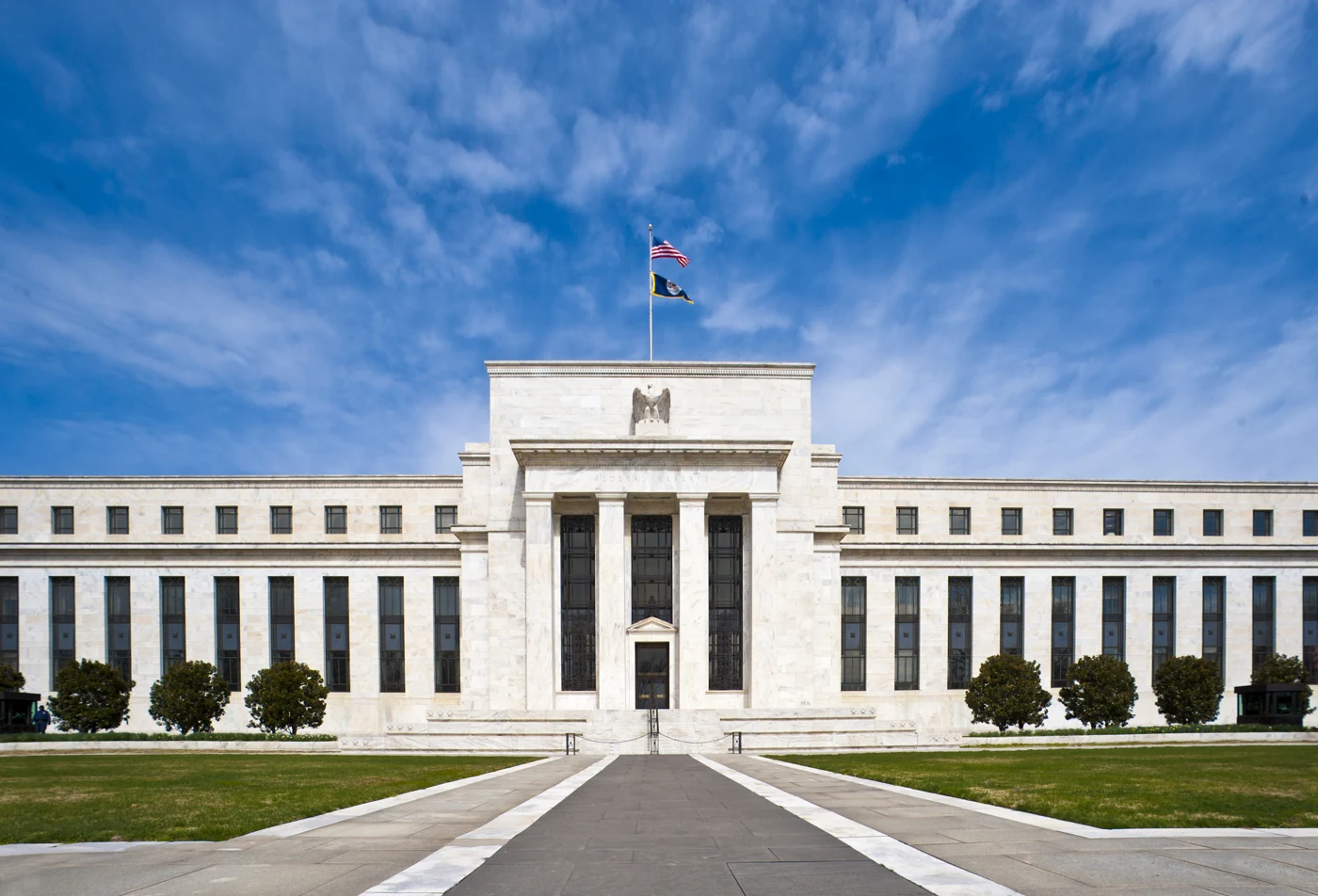
Covering Tuesday, October 27, 2026. Published Wednesday, October 28. This edition uses information available through Tuesday’s close; later decisions are not included.
The Fed’s decision was still pending
The Federal Reserve’s scheduled meeting spans October 27–28. [1] Tuesday was the first day of that meeting; the policy decision had not yet arrived at the close covered by this edition. Any assessment written from Tuesday’s perspective needs to preserve that sequence rather than use a later announcement to explain what investors already knew.
Analysis: monetary policy influences the conditions under which households and businesses borrow, save, and invest. But the policy rate is not the rate on every mortgage or corporate loan. Financial markets also assess future inflation, repayment risk, and how long money will be committed. An article about the Fed should therefore distinguish its direct decision from the broader financing environment surrounding it.
Why the explanation matters alongside the rate
A policy announcement contains more than a number. The accompanying statement can change how readers understand the central bank’s assessment of inflation, employment, and economic activity. Even when the rate itself is unchanged, the explanation may clarify which developments officials regard as temporary and which require closer attention.
Analysis: imagine two statements that leave rates at the same level. One emphasizes improving inflation evidence, while the other stresses continuing price pressure. They could lead readers to form different expectations about later meetings despite the identical immediate decision. This is a hypothetical illustration of how communication works, not a description of an announcement already made this week.
Italy’s budget plans provided a fiscal-policy counterpart
Reuters reported Tuesday that Italy planned cabinet approval of its 2027 budget on Wednesday, following talks with EU authorities on temporary deficit flexibility. The package envisaged roughly €23.5 billion in tax cuts and spending increases, with higher taxation of financial firms and potentially energy groups helping fund it. [2] The reported plan still preceded the cabinet action.
Analysis: fiscal policy concerns government revenue and spending rather than the central bank’s interest-rate setting. The economic consequences depend on which taxes change, who receives support, how long measures last, and how they are financed. A large headline total alone cannot tell a reader how much any family or business would gain. The distribution and timing of the measures are central to that assessment.
Support today can create financing choices tomorrow
Analysis: a government can seek to ease immediate pressure on households while facing a limited budget. If it borrows more, it creates future debt-service obligations; if it raises taxes or reduces other spending, it shifts the burden elsewhere. Those choices have different effects across income groups, industries, and generations.
Illustration: temporary assistance for energy bills may help families absorb a price shock. Funding that assistance through an industry tax affects the firms paying it, while funding it through borrowing adds obligations to future budgets. This does not establish which option is best in Italy’s case. It explains why an assessment needs both the spending proposal and its financing arrangements before judging the overall effect.
Monetary and fiscal policy can pull on the same economy
Analysis: interest-rate decisions and government budgets reach households through different channels, yet both can influence spending and investment. A firm may face higher financing costs while receiving stronger demand from customers supported by fiscal measures. The net effect depends on the size, timing, and design of each policy, as well as the business’s circumstances.
That interaction is why a policy roundup should avoid treating every announcement as an isolated event. A reader following inflation needs to understand both private-sector demand and government choices. A reader following public finances needs to consider the cost of borrowing as well as the planned spending. Neither perspective is complete on its own.
What would make the next update meaningful
For the Fed, the next report should identify the actual rate decision and the language supporting it. For Italy, it should distinguish cabinet approval, subsequent legislative steps, and implementation. A plan, an approved measure, and a policy already affecting payments are different stages of a story.
Analysis: the strongest follow-up connects those stages to observable consequences while acknowledging the time they take. Household bills, company investment, and public borrowing costs do not all adjust immediately. Following implementation and later evidence gives readers a firmer basis for judgment than treating the first political or market response as the complete economic result.