Covering Monday, October 26, 2026. Published October 27.
What was reported
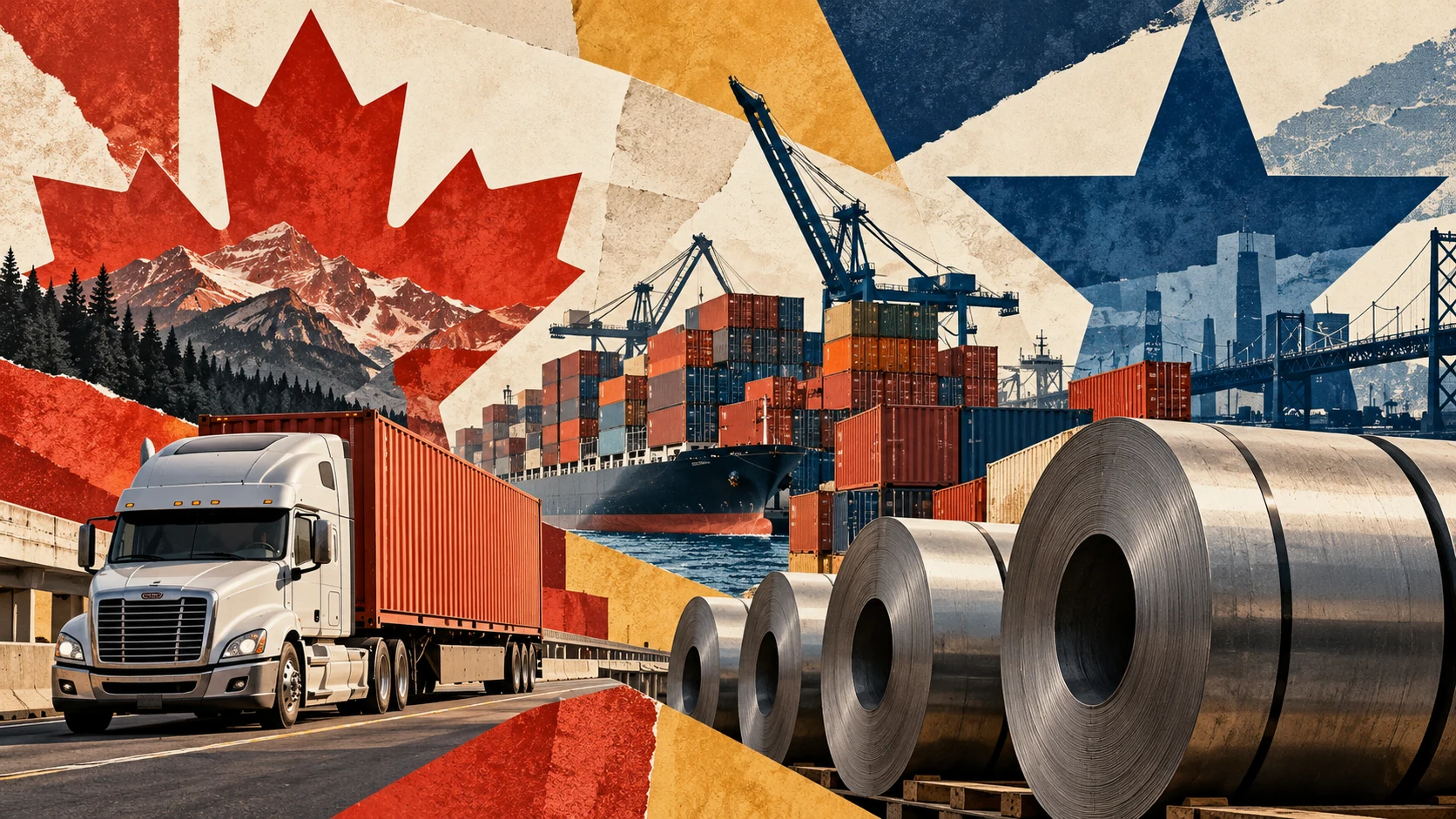
The United States and Canada were negotiating possible relief from tariffs on Canadian steel and automobiles, Reuters reported Monday, citing six sources. The talks concerned Section 232 duties, including tariffs of up to 50% on steel and 25% on autos. No final agreement was announced in that report. [1]
The distinction between talks and implementation is central to this story. A negotiation can influence expectations before it changes any company’s actual import bill. Readers should look for an official text and an effective date before treating possible relief as available. The reported tariff levels provide context for the negotiations; they do not establish the terms of a future agreement.
The economic tradeoff
Analysis: tariffs can support protected domestic producers by making competing imports more expensive. But manufacturers that use imported steel or parts may face higher input costs. Depending on competition and demand, firms can absorb those costs through lower margins, pass some on to customers, or change suppliers.
Relief would therefore affect businesses differently. A manufacturer buying steel might welcome lower costs, while a producer competing with imports could face renewed price pressure. Neither outcome should be assumed for every company in a sector. Illustration: a steel mill and an equipment manufacturer can face opposite incentives even when both operate domestically. The mill may benefit from less import competition, while the manufacturer may prefer more sources of competitively priced steel. Evaluating the policy therefore requires asking whose costs and sales are changing, rather than assuming every domestic business gains or loses together.
The details that decide who benefits
Watch for an official agreement, the products it covers, the actual tariff rates, and the date changes take effect. Exemptions, quotas, or conditions could matter as much as the headline announcement. Until those details exist, businesses cannot treat possible relief as a settled change to their costs.
For a company, the practical question is whether its particular shipment qualifies under the final rules. A broad announcement about steel or automobiles may leave substantial differences across products and supply chains. A useful follow-up article would translate the published terms into concrete examples, while identifying unresolved details instead of applying one headline percentage to every imported item.
What earlier tariffs can teach us
Historical context: a 2023 U.S. International Trade Commission study examined tariffs during 2018–2021. It found that the Section 232 measures increased domestic steel production, while higher input prices reduced production in downstream industries that used steel and aluminum. U.S. importers bore nearly the full cost of the tariffs examined. [2]
Those are findings about an earlier period, not estimates of the outcome of the current negotiations. The study did not measure every economy-wide effect or settle the national-security arguments behind the tariffs. It does show why looking only at the protected industry can miss part of the economic picture. The value of the historical evidence is the tradeoff it reveals, not a ready-made forecast for a new agreement. Different products, market conditions, and policy designs can produce different results. Readers should use the earlier study to ask better questions about both protected producers and their customers, while reserving judgment on the size of any current effect until evidence becomes available.
A simple supply-chain example
Illustration: imagine a manufacturer buying imported steel to make equipment. A tariff raises its landed cost even if the overseas seller’s listed price stays unchanged. The manufacturer might seek another supplier, accept a smaller margin, or charge customers more.
If a later agreement lowers the duty, the business may gain room to reduce prices or reinvest. But existing contracts, inventories, and competitors’ behavior can delay the response. Tariff relief is therefore not a guarantee that the final retail price will immediately fall by the same percentage. The same example shows why a lower tariff need not translate dollar for dollar into a lower equipment price. Materials are only part of a manufacturer’s total costs; labor, financing, transport, and overhead also matter. A business could use some relief to rebuild margins after an expensive period. Which response occurs depends on conditions that an announcement alone cannot reveal.
Beyond the next headline
Analysis: uncertainty itself can influence decisions. A company considering a factory expansion has to plan around costs that last longer than one election or negotiating round. Clear implementation dates and durable rules make those calculations easier; repeated reversals make them harder.
For the next update, separate political statements from signed measures. The strongest follow-up would identify the covered products, effective date, remaining restrictions, and the businesses directly affected. Until then, this remains a story about possible policy change rather than completed relief. For households, the connection may be indirect: trade rules can affect prices, business investment, and employment opportunities through the companies that use or produce the affected goods. Those effects develop over time and are difficult to isolate from other economic changes. The next article should follow implementation and measurable business responses, rather than treating a political statement as the final economic result.